Happy Christmas Meow Embroidery Review
As a designer who spends half my life staring at digitized files and the other half troubleshooting tension issues on the sewing machine, I don’t just look at an embroidery design; I stress-test it in my head before I even thread the needle. When Happy Christmas Meow landed on my desk, my first instinct was to ask: does this actually work for a real project, or is it just another cute clipart that falls apart when stitched? After analyzing its visual weight, thematic appeal, and potential application across various mediums, here is my practical evaluation of this machine embroidery design.
First Impressions and Visual Personality
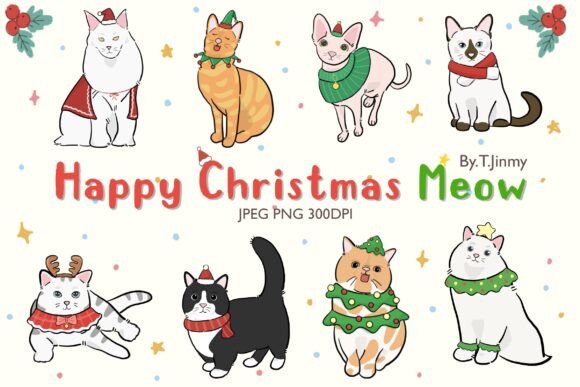
The moment you see the layout of Happy Christmas Meow, it communicates a specific mood: cozy, playful, and distinctly festive without being overwhelming. In the world of holiday embroidery project assets, there is a fine line between "charming" and "cluttered." This design leans heavily into the charming side. The illustration style suggests a soft, approachable aesthetic that feels native to winter-themed collections.
For an Illustrations-based file, the composition relies on clear shapes rather than intricate, fragile details. This is crucial because it translates well to thread. A cat motif during the holidays naturally invites warm textures—think chunky knits, velvet bows, or fluffy tails—which are forgiving in stitch form. The visual personality here is relaxed, making it ideal for makers who want their products to feel handmade and heartfelt rather than mass-produced and rigid.
Real-World Application: From Screen to Stitch
Let’s talk about where this design truly shines. I recently envisioned using Happy Christmas Meow for a batch of custom holiday gifts for local clients. Specifically, I looked at how it would perform on a standard cotton canvas tote bag design. Because the central figure is likely balanced and contained, it sits beautifully on the front panel of a tote, creating an instant conversation starter at coffee shops or markets.
However, the versatility doesn’t stop there. For Etsy sellers and small business owners, this design has high commercial viability across several categories:
- Custom Apparel: It works exceptionally well as a chest-left placement on crewneck sweatshirts. The theme fits the "ugly sweater" trend but offers a more sophisticated, boutique alternative. It also pops nicely on plain white or cream t-shirts for family matching sets.
- Baby and Nursery Items: The gentle nature of the subject makes it perfect for baby onesies or burp cloths. Parents love personalized gifts, and a baby embroidery piece featuring a festive cat adds a touch of whimsy to nursery decor.
- Kitchen and Home Decor: I strongly recommend testing this on linen tea towels or kitchen aprons. The holiday theme aligns perfectly with seasonal hosting, and the design’s scale usually allows it to be placed near the pocket area of an apron without interfering with function.
- Holiday Gifts and Patches: As a standalone embroidered patch, it can be ironed or sewn onto beanies, denim jackets, or backpacks. It serves as a great accessory for anyone wanting to add a personal touch to their winter wardrobe.
Strategic Considerations for Commercial Use
When evaluating any digital embroidery file for resale, I always consider the end-user experience. Customers trust brands that deliver consistent quality. If a design looks pixelated or distorted after stitching, it reflects poorly on the maker. Happy Christmas Meow appears to have clean lines, which helps maintain brand consistency. When you present a printable mockup or a photo of the finished product, the clarity of the design ensures that the customer sees exactly what they are buying.
Furthermore, the emotional resonance of the design boosts buyer engagement. Holiday shopping is driven by sentiment. A design that evokes warmth and joy—like a happy cat celebrating the season—creates an immediate connection. It’s not just a piece of fabric; it’s a token of affection. This increases the perceived value of your handmade product, allowing you to position it as a premium item in your shop.
Where to Exercise Caution
No design is universally perfect, and Happy Christmas Meow has specific constraints you must respect to ensure a professional finish. Here is where you need to be careful:
- Small Hoop Sizes: If you attempt to stitch this in a very small hoop (under 4x4 inches), you risk losing detail. Tiny elements might merge together, turning distinct features into a blurry blob. Always verify the minimum recommended hoop size.
- Textured and Stretchy Fabrics: Avoid placing this on highly textured fabrics like boucle wool or thin, stretchy synthetics unless you are using heavy-duty stabilizers. The stitches may pucker or distort, ruining the clean look of the illustration.
- Dense Stitch Areas: Check the stitch density. If the design uses too much fill stitch in a small area, it can become stiff and uncomfortable against the skin, especially on baby clothes or delicate apparel.
- Curved Surfaces: While it might fit on a cap, curved surfaces like baseball hats require precise digitizing to prevent warping. Test this thoroughly before offering it as a standard cap design.
Practical Designer Notes for Best Results
Before you rush into production mode, follow these essential steps to guarantee that your finished product looks as good as it feels.
First, test the design on scrap fabric that matches the final material you intend to use. Fabric texture plays a huge role in how thread sits on the surface. A design that looks crisp on cotton might look different on fleece or felt.
Second, pay close attention to thread colors. Ensure there is enough contrast between the thread and the fabric. If you are stitching on dark fabric, make sure the lighter threads will show up clearly. Conversely, if the design includes white or light pastel threads on a light background, visibility might be an issue.
Third, review the stitch types. Look for a healthy mix of satin stitch for outlines and running stitch for fine details. If the design relies too heavily on one type of stitch, it may lack depth. Also, inspect small details closely—are the eyes and whiskers distinct, or do they look like smudges?
Fourth, confirm licensing terms. Since you are likely looking to sell this as part of your craft business or small shop product line, you must know if the license permits commercial use. Some design assets are for personal use only. Never assume; always read the fine print to avoid legal issues.
Finally, use proper stabilizer. For holiday items that will be washed frequently, such as aprons or baby clothes, a cut-away stabilizer is often best for long-term durability. For temporary projects like gift tags or one-time wearables, tear-away might suffice, but stability is key to preventing puckering over time.
Final Verdict
Happy Christmas Meow is a solid, versatile addition to any embroiderer’s library. It balances charm with technical feasibility, making it suitable for everything from quick craft fair projects to higher-end boutique merchandise. By respecting its limitations regarding hoop size and fabric choice, and by paying attention to color contrast and stabilization, you can create stunning personalized gifts that customers will love. It’s a design that doesn’t just fill space—it brings a little holiday spirit to every stitch.